



Are you seeking an efficient method to streamline and enhance your business operations? Enterprise Resource Planning (ERP) systems are your answer, now more than ever. With the global ERP market projected to reach $96.04 billion by 2027, growing at a CAGR of 10.2% from 2020, these systems are crucial for modern businesses. An ERP system enables you to oversee a wide array of tasks, including financial management, supply chain management, project management, and customer relationship management. While acquiring and implementing these systems can be costly and intricate, you can construct your very own system in a relatively short time frame with the right approach.
This article will delve into the steps for developing an ERP system, leveraging open-source software and readily accessible resources, and tapping into a rapidly expanding and evolving market.
What is ERP Systems
Enterprise Resource Planning (ERP) software is a comprehensive business management system designed to integrate and streamline various core processes within an organization. These processes can include accounting, human resources, supply chain management, manufacturing, project management, and customer relationship management. Enterprise resource management systems provide a centralized platform that enables businesses to manage their operations efficiently, make data-driven decisions, and enhance overall productivity. If you're interested in implementing ERP software for your organization, consider exploring the expertise and solutions offered by Join.To.IT to find a tailored solution that suits your business needs.
Core Components of ERP Software
- Modules: ERP systems consist of multiple modules that cater to different business functions. These modules can include finance and accounting, human resources, procurement, inventory management, sales and marketing, production, and more.
- Database: ERP systems rely on a centralized database that stores all relevant data. This database serves as the backbone of the software, ensuring data consistency and integrity across different departments and modules.
- User Interface: ERP software typically offers a user-friendly interface that allows employees at all levels to access and interact with the system. This accessibility promotes efficient data entry, retrieval, and analysis.
- Reporting and Analytics: ERP systems often include robust reporting and analytics tools. These features enable businesses to generate customized reports, track key performance indicators (KPIs), and gain insights into their operations, facilitating informed decision-making.
Benefits of ERP Software for Businesses
- Improved Decision-Making: With real-time data access and advanced analytics, ERP software empowers organizations to make data-driven decisions. Managers can quickly assess performance, identify trends, and respond to market changes more effectively.
- Data Integration: ERP systems centralize data from various departments and processes, eliminating data silos. This integration provides a holistic view of the business, enabling better coordination and collaboration among teams.
- Cost Reduction: ERP systems help organizations optimize resource allocation, reduce excess inventory, and minimize downtime. These cost-saving measures contribute to improved profitability.
- Enhanced Customer Service: ERP software facilitates better customer relationship management by providing a complete view of customer interactions and preferences. This enables businesses to personalize offerings and provide superior customer service.
- Scalability: ERP systems are designed to grow with your business. As your organization expands, you can add new modules and functionalities to accommodate changing needs.
- Compliance and Security: Many ERP systems incorporate compliance features to ensure adherence to industry regulations. They also offer robust security measures to protect sensitive data.
Looking for more info about ERP development?
Please feel free to contact our business development specialists for a free consultation.
Choosing Between Custom-Built and Off-the-Shelf ERP Solutions
Deciding between custom and ready-made ERP systems depends on their key differences, suited to varying business requirements.
Custom ERP systems are tailored to the unique needs of a business, offering a high degree of customization and flexibility. They fit specific business models and workflows but require a higher initial investment and a longer implementation process due to bespoke development.
On the other hand, ready-made ERP systems are pre-built with standard features to cater to a broad range of businesses. They are less customizable but more cost-effective and quicker to deploy. While scalable, their adaptability to unique business needs may be limited compared to custom systems.
In terms of support and maintenance, custom ERPs often offer more personalized support at a potentially higher cost, whereas ready-made systems typically include vendor-provided support and regular updates.
The choice between custom and ready-made ERP systems ultimately hinges on a business's specific needs, budget, and strategic goals. Custom systems are ideal for businesses requiring a tailored solution, while ready-made systems are suitable for those seeking a standard, quickly deployable solution.
Benefits of Custom Solutions
- Tailored to Specific Business Needs: Custom ERP solutions are designed to fit your business's unique processes and requirements, providing a more effective and efficient system.
- Scalability and Flexibility: As your business grows or evolves, custom ERP software can be modified and scaled to accommodate new processes, departments, or functionalities.
- Competitive Advantage: By having a system that is uniquely suited to your business operations, you can gain a competitive edge, as the system can enhance efficiency, reduce errors, and improve decision-making.
- Long-Term Cost Savings: While the initial investment is higher, custom ERP systems can lead to long-term savings by improving operational efficiency and eliminating the need for multiple disparate systems.
- Integration Capabilities: Custom ERP systems can be more effectively integrated with other existing systems within your organization, providing a seamless workflow and data consistency.
Essential Features of ERP Software
Let's take a closer look together at the core functionalities an ERP software should encompass.
Financial Management
ERP systems provide robust financial management capabilities, allowing businesses to maintain a firm grip on their financial health. Key features include general ledger management, accounts payable and receivable, budgeting, and financial reporting.
Supply Chain Management
Effective supply chain management is vital for optimizing production and minimizing costs. ERP software aids in inventory management, procurement, and order fulfillment. It ensures efficient tracking of stock levels, facilitates seamless procurement processes, and enhances order processing, ultimately leading to improved supply chain efficiency.
Human Resources (HR)
The HR module of an ERP system centralizes employee data, making it easier to manage the workforce. This includes employee records, payroll processing, attendance management, and talent acquisition. By automating these tasks, HR teams can focus on strategic initiatives such as talent development and employee engagement.
Customer Relationship Management (CRM)
ERP systems with integrated CRM capabilities empower organizations to build and maintain strong customer relationships. These tools manage customer contact information, track sales leads, and support marketing efforts. A unified CRM enables businesses to deliver personalized customer experiences, resulting in higher customer satisfaction and loyalty.
Manufacturing and Production
Manufacturing and production features within ERP systems cover production planning, quality control, and bill of materials (BOM) management. These functionalities help manufacturers optimize production schedules, maintain product quality, and manage complex product structures efficiently.
Analytics and Reporting
Robust reporting and analytics tools are at the heart of ERP systems. They allow users to create custom reports, dashboards, and real-time analytics, providing valuable insights into business performance. Decision-makers can access critical data to make informed choices and identify areas for improvement.
Integration and Data Exchange
Modern businesses rely on the seamless integration of software systems. ERP solutions support integration with other applications through APIs, ensuring data flows seamlessly across the organization.
Security and Compliance
ERP systems prioritize data security and compliance. They employ access control mechanisms to restrict data access based on user roles and responsibilities. Data encryption and compliance with data protection regulations are standard practices to safeguard sensitive information.
Scalability and Customization
An ERP system should be scalable to accommodate an organization's growth. Additionally, it should offer customization options, allowing businesses to tailor the system to their specific processes and workflows.
ERP Software Development Process Step-by-step
Planning and Analysis
Thorough planning and business analysis represent the cornerstone of successful ERP software development. This initial phase is akin to laying a strong foundation for a skyscraper; without it, the entire structure risks instability and collapse. Conducting in-depth research and setting clear objectives is of paramount importance at this stage. It involves defining the specific goals and outcomes the ERP system development aims to achieve for the organization. This process not only provides a roadmap for the development team but also ensures alignment with the company's strategic vision.
Moreover, understanding existing business processes is an indispensable aspect of this phase. ERP systems are designed to optimize and streamline these processes, and to do so effectively, developers must first comprehend the intricate workings of the organization. Detailed analysis reveals bottlenecks, inefficiencies, and areas where automation can drive improvements. It empowers businesses to make informed decisions about which features and modules to prioritize in ERP system development, ultimately enhancing efficiency and productivity. By taking the time to plan and analyze meticulously, organizations not only ensure that the ERP system meets their unique needs but also minimize the risk of costly and time-consuming revisions down the road, setting the stage for a successful ERP implementation.
Designing the Architecture
Designing the architecture of an ERP system is a critical phase that significantly influences the system's effectiveness and longevity. A well-thought-out architecture must strike a delicate balance between integration, scalability, and flexibility to meet the evolving needs of an organization.
Integration: Seamless integration is paramount in the development of ERP system as it ensures data flows effortlessly between various modules and components. To achieve this, employ standardized APIs and data exchange protocols to facilitate communication between different parts of the system. Additionally, consider implementing middleware or integration platforms that simplify the connection with external applications, allowing the ERP to coexist harmoniously within a broader technological landscape.
Scalability: ERP systems should be designed with scalability in mind to accommodate an organization's growth over time. Begin by architecting a modular system where each component can be independently upgraded or expanded without causing disruptions to the entire system. Invest in a robust database structure capable of handling increased data volumes. Cloud-based solutions can also provide scalability by allowing organizations to add resources as needed. Scalability ensures that the ERP system remains effective and responsive even as the business evolves, preventing the need for frequent, costly overhauls.
Flexibility: Flexibility is a key attribute of a modern ERP system. Organizations undergo changes in processes, regulations, and market conditions, necessitating adjustments to the software. Building ERP applications with flexibility into the architecture, consider a modular system design that allows for the addition or removal of features with minimal disruption. Employ customizable workflows and configurations to adapt the system to changing business requirements. Utilize open-source technologies and frameworks that permit easy modifications and enhancements.
Development
The ERP system development phase is where the conceptual design takes shape and becomes a functional reality. This crucial stage involves understanding what ERP programming is, coding, selecting the appropriate programming languages, and utilizing frameworks that align with the project's objectives and requirements.
Coding represents the heart of ERP development, where software engineers and developers translate design specifications into actual lines of code. This phase demands precision, attention to detail, and adherence to coding best practices.
The choice of programming languages is a pivotal decision that directly impacts the ERP system's performance, scalability, and maintainability. While various programming languages are suitable for ERP system development, some of the commonly used ones include:
- Java: Known for its portability and platform independence, Java is a popular choice for large-scale ERP systems. It offers robust support for multithreading, security, and extensive libraries.
- Python: Python's simplicity and readability make it an attractive option. It excels in rapid development and is favored for its versatility and rich ecosystem of libraries.
- C#: A Microsoft technology, C# is often chosen for ERP system development when organizations have a Windows-centric infrastructure. It integrates seamlessly with Microsoft technologies and offers strong support for desktop applications.
- JavaScript: JavaScript is a must for web-based ERP systems, as it powers interactive user interfaces and dynamic web applications. It's commonly used in conjunction with backend technologies like Node.js.
Frameworks are essential tools that streamline the development process by providing a structured foundation and pre-built components. ERP application development software often involves the use of frameworks tailored to specific programming languages. For instance:
- Spring Framework (Java): Spring simplifies the development of complex ERP systems by providing comprehensive support for various aspects like dependency injection, security, and data access.
- Django (Python): Django is a high-level Python framework that accelerates web-based ERP system development. It offers built-in authentication, database management, and an admin interface for rapid prototyping.
- .NET Framework (C#): For C# developers, the .NET Framework is a robust choice, offering a wide range of tools and libraries for ERP app development on Windows.
- React and Angular (JavaScript): When it comes to web-based ERP systems, JavaScript frameworks like React and Angular are instrumental in creating ERP software in dynamic, responsive, and user-friendly interfaces.
Testing
Testing is an integral part of ERP development, and its importance cannot be overstated. Rigorous testing is the safeguard that ensures the ERP system functions as expected, meets user requirements, and is free from bugs that could potentially disrupt critical business operations.
The Importance of Rigorous Testing:
- Quality Assurance: Thorough testing is the linchpin of quality assurance. It is the primary means by which developers identify and rectify issues before the ERP system is deployed in a production environment. This helps avoid costly disruptions and downtime that can occur due to software glitches.
- User Satisfaction: Users expect ERP systems to be reliable and easy to use. Rigorous testing ensures that the software aligns with user expectations, leading to higher user satisfaction. A smoothly functioning ERP system empowers employees to work more efficiently, ultimately contributing to improved productivity.
- Error Detection: Testing uncovers bugs and issues that might not be apparent during the development phase. It includes various testing types, such as functional, integration, and regression testing, which systematically identify and address problems. By resolving these issues early, businesses prevent potential financial losses and operational bottlenecks.
- Data Accuracy: ERP systems handle vast amounts of critical data. Rigorous testing verifies the accuracy of data processing and ensures that information flows correctly between different modules. Data integrity is vital for informed decision-making and compliance with regulatory requirements.
- Compliance and Security: Many industries are subject to regulatory and security standards. Testing ensures that the ERP system complies with these regulations and incorporates robust security measures to protect sensitive data. This is especially critical in sectors like healthcare and finance.
- Cost Savings: While testing does require an investment of time and resources, it leads to significant cost savings in the long run. Identifying and fixing issues early in the development process is far more cost-effective than addressing them after deployment.
Deployment and Maintenance
These main stages in the development of an ERP system are pivotal in ensuring a smooth transition from development to practical use, as well as maintaining the system's effectiveness and alignment with evolving business needs.
Deployment Strategies:
Deployment strategies can vary depending on organizational preferences and requirements. Some opt for a Phased Deployment, rolling out ERP modules incrementally to minimize disruption. This approach begins with essential functions, like financials or inventory management, and gradually introduces additional modules as users become acclimated. In contrast, the Big Bang Deployment approach involves a company-wide, simultaneous implementation of the entire ERP system, offering immediate access to all functionalities. However, it requires meticulous planning and testing. An alternative approach is Pilot Deployment, where a smaller group or department tests the system in a controlled environment before broader implementation.
Ongoing Maintenance and Updates:
Ongoing maintenance is a critical aspect of ERP system management. Regular Updates are essential to keep the system secure, compliant, and competitive. These updates include software patches, bug fixes, and feature enhancements. User Training and Support should remain a priority to ensure employees are proficient in using the ERP system. Offering responsive support helps address questions and concerns, maintaining user confidence.
Effective Data Management practices are vital to safeguard data integrity. Continuous Performance Monitoring keeps track of system efficiency, identifying bottlenecks or slowdowns for timely optimization. Security Updates are crucial to address evolving cybersecurity threats and maintain data protection and regulatory compliance. Scalability is a key consideration as businesses grow. The ERP system must accommodate new users, increased data volume, and evolving business demands. Establishing a feedback mechanism to capture user input and suggestions is invaluable for future updates and enhancements, ensuring the ERP system remains aligned with business needs.
Common Challenges in ERP Software Development and How to Overcome Them
To develop ERP software is a complex undertaking, and it often comes with its fair share of challenges. Addressing these challenges is crucial to successful ERP systems development. Some common pitfalls and how to overcome them include.
Lack of User Training
- Challenge: Inadequate user training can lead to frustration, inefficiencies, and resistance to the new system.
- Solution: Invest in comprehensive training programs for end-users. Conduct workshops, provide user manuals, and offer ongoing support. Engaging users in the testing phase can also help familiarize them with the system and address concerns.
Resistance to Change
- Challenge: Employees may resist changes that come with ERP implementation, fearing disruptions to their daily routines.
- Solution: Communicate the benefits of the ERP system to employees, emphasizing how it will improve their work processes. Engage key stakeholders early in the planning process to ensure their buy-in and involvement. Establish a change management strategy to address resistance and encourage a smooth transition.
Data Migration Issues
- Challenge: Migrating data from legacy systems to the new ERP can be complex and fraught with challenges, including data inconsistencies and inaccuracies.
- Solution: Conduct a thorough data audit and clean-up before migration. Develop a data migration plan that includes data mapping, validation, and testing. Consider running parallel systems during migration to minimize data discrepancies and ensure data integrity.
Scope Creep
- Challenge: Expanding the scope of the ERP project beyond the original plan can lead to budget overruns and delays.
- Solution: During the planning and discovery phase, use the software requirements specification document. This document defines the project scope clearly from the outset and establishes a change control process to manage any proposed scope changes. Prioritize essential functionalities and address additional features in later project phases.
Inadequate Vendor Support
- Challenge: Reliance on ERP vendors for support can lead to frustration if response times are slow or support is insufficient.
- Solution: Negotiate service level agreements (SLAs) with vendors that define response times and support commitments.
Integration Challenges
- Challenge: Integrating the ERP system with existing systems and third-party applications can be technically challenging.
- Solution: Plan integration carefully and utilize middleware or integration platforms when necessary. A clear definition of integration with third-party systems at the planning stage can eliminate many problems in the future, when your ERP system is almost ready.
Data Security Concerns
- Challenge: ERP systems store sensitive company data, making them attractive targets for cyberattacks.
- Solution: Implement robust cybersecurity measures, including data encryption, access controls, and regular security audits. Stay informed about the latest security threats and apply necessary patches and updates promptly.
Ineffective Project Management
- Challenge: Poor project management can lead to missed deadlines, budget overruns, and misaligned objectives.
- Solution: Appoint an experienced project manager who can lead the ERP project effectively. Establish clear project milestones, timelines, and performance metrics. Regularly review project progress and make adjustments as needed.
Cost of implementing an ERP system
The cost of how to implement ERP system for both small businesses and enterprises can vary considerably, typically falling within a range of $50,000 to $350,000, though it may exceed this estimate. However, this is a rough estimate, and several factors come into play that can either increase or decrease the final price:
- Development Team Selection: The choice of the software development company significantly impacts the cost of ERP system development. A reputable development company provides access to skilled resources, ensuring the quality of the ERP solution. While this elevates development costs, it also assures a high-quality end product, minimizing potential issues down the line.
- Development Hours: The total development time required to create an ERP system is a major cost driver. The development duration is directly correlated with the number of developers involved. For complex applications where time efficiency is crucial, more developers may be required to expedite the project, resulting in higher expenses. Conversely, less complex projects with fewer development hours will typically cost less.
- Geographic Location of Developers: The geographical location of the software development team significantly influences ERP development costs. For instance, the price of ERP software development in North America differs significantly from that of software development companies in Eastern Europe.
- Choosing the platform and technologies: There are different platforms and architectures for developing ERP, such as cloud, local, hybrid, monolithic, microservice, etc. Each of them has its advantages and disadvantages, as well as affects the cost of development. Also, you need to choose the most suitable tech stack, such as programming languages, frameworks, databases, cloud services, etc.
- The number of integrations with the system: The total amount of integrations with external systems with your ERP system directly affects the cost of project implementation. A larger number of integrations obviously requires the development of more complex functionality and additional hours for development.
- The deadlines and budget of the project: The faster you need the ERP system, the more resources it requires for development. You also need to consider your budget possibilities and expectations for return on investment. It is worth discussing the payment terms and contract with your partner in advance.
Choosing the Right Development Team for Your ERP Project
Selecting the right development team for your ERP project is a pivotal decision that can greatly influence the success of your implementation. Several critical factors should be considered when making this choice:
- Experience: An experienced development team is invaluable. Look for teams with a proven track record in developing ERP software. Ask for references and case studies to assess their previous projects. ERP systems are complex, and seasoned developers are better equipped to navigate challenges and provide innovative solutions.
- Expertise: Ensure that the team possesses the necessary technical expertise in the ERP system you plan to implement. Different ERP solutions require different skills. If your project involves, for example, SAP, Oracle, or Microsoft Dynamics, the development team should have specialized knowledge in that particular system.
- Level of Communication: Effective communication and easy access to monitoring the progress of your ERP system implementation are incredibly important factors when choosing a development team. Regular meetings, reports, and specialized software like Trello or Jira will help you stay informed about the current development status and make timely adjustments if needed.
- Cost: While cost is a significant factor, it should not be the sole determinant in choosing a development team. Consider your budget but also weigh the team's capabilities and experience against their pricing. A lower-cost option may seem appealing, but it may not deliver the quality and expertise required for a successful ERP implementation.
- Project Management Skills: A proficient development team should have strong project management skills. They should be able to plan and execute the project efficiently, adhering to timelines and budgets. Project management capabilities are crucial in ensuring that the ERP system is delivered on time and within scope.
- Support and Maintenance: Post-implementation support and maintenance are crucial for the long-term success of your ERP system. Inquire about the team's ability to provide ongoing support, including updates, bug fixes, and user training.
- Cultural Fit: Assess how well the development team fits within your organization's culture. A team that understands your company's values and objectives is more likely to deliver a solution that aligns with your goals.
- Compliance and Security: If your organization operates in a regulated industry, ensure that the development team is well-versed in compliance requirements and data security best practices.
Looking for ERP developers?
Schedule a consultation with our business development manager to unlock solutions for your business challenges.
Partner with Join.To.IT: Your Gateway to Innovative Software Solutions
Join.To.IT stands at the forefront of technological innovation, emerging as a key technology partner based in Ukraine. We specialize in crafting bespoke software solutions tailored to the unique needs of startups and established companies alike, aiming to drive growth and innovation.
Unmatched Expertise and Customized Solutions
At Join.To.IT, our comprehensive approach to ERP development lies in deep drawing to clients' business processes and finding the best solutions. We don't just create software, we provide holistic solutions that are intricately designed to meet and surpass our clients' expectations. Our process involves a deep dive into your business, ensuring that our digital solutions perfectly align with your specific needs and objectives.
Our Track Record: A Testament to Our Capability
Our portfolio boasts a range of successful projects across various industries, particularly in the realms of custom ERP and CRM systems. Key highlights include:
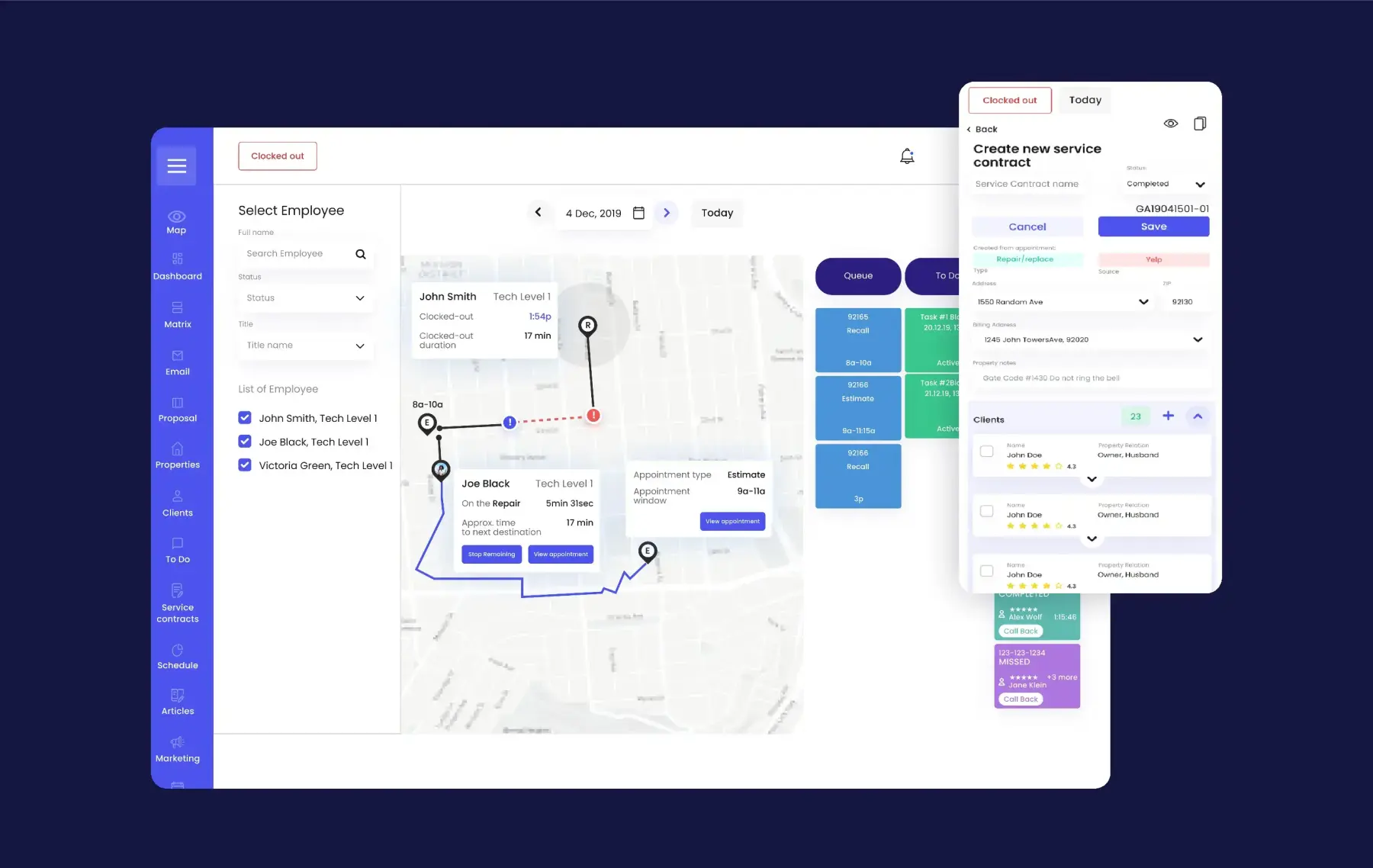
- Orcatec: A robust business platform for managing field businesses, integrating various services into a single ecosystem. Our team of over 20 engineers continuously enhances its functionality, making it a convenient, all-in-one solution for users.
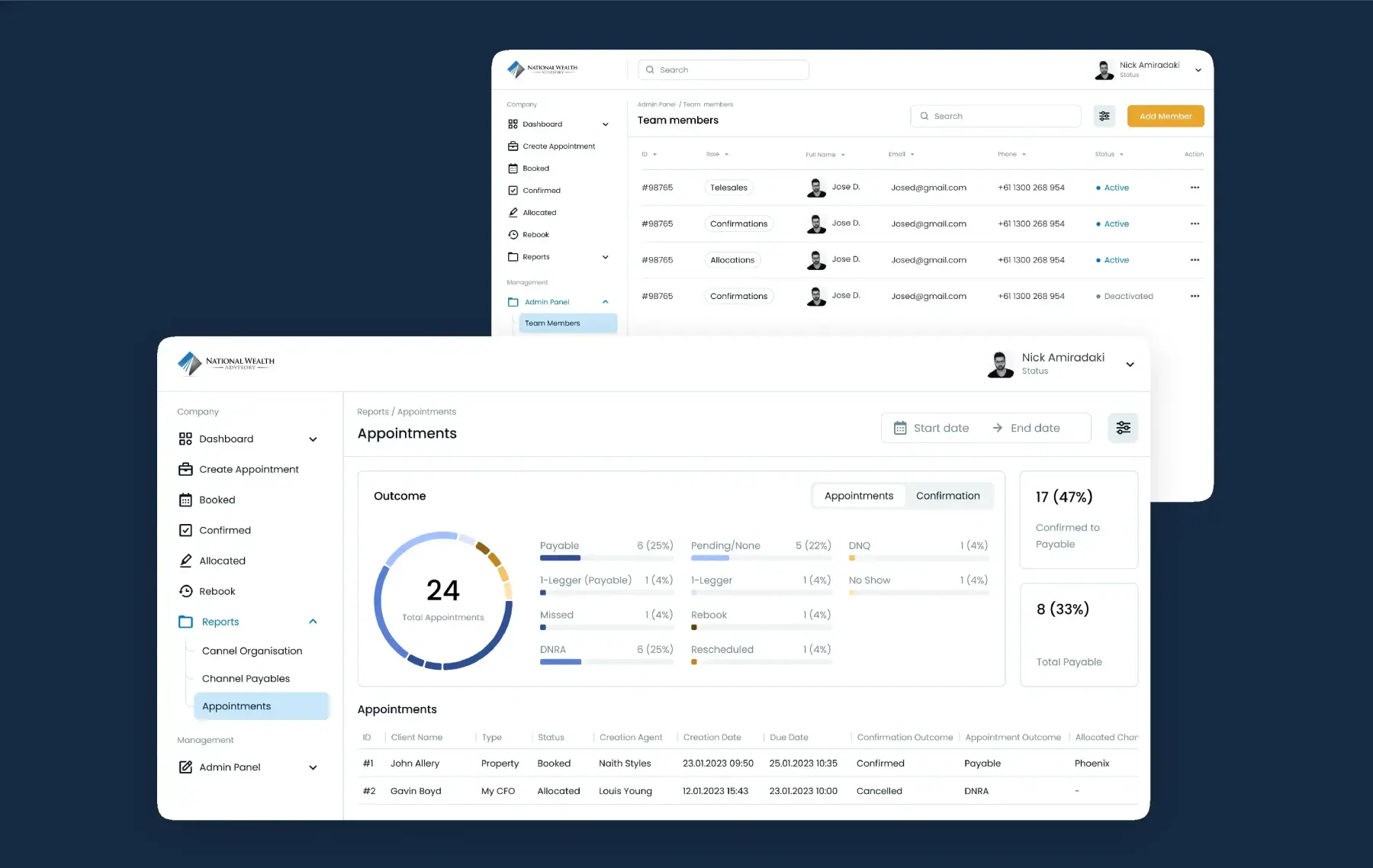
- National Wealth Advisory: We developed a Mini-CRM system tailored to the client's business processes, integrated with their website and Pipedrive CRM. This system streamlines the consulting life cycle for financial management services in Australia.
- Everworks Partnership: Collaborating with Everworks, we built an extensive internal system for a major automotive company, encompassing CRM, ERP, and HRMS modules. This project involved meticulous requirement gathering, wireframing, prototyping, and quality testing.
Our Commitment to Your Success
At Join.To.IT, we prioritize transparent communication and efficient implementation of digital products. Our core competency is not just in development but in understanding and intertwining with your business processes to deliver optimal solutions.
Our experienced business development managers are eager to provide you with a free consultation, guiding you through the intricacies of developing your own ERP system or enhancing existing market solutions. This consultation is a stepping stone towards understanding your project's scope and charting the path for its successful implementation.
Explore our detailed portfolio and case studies.
Ready to transform your business with a custom software solution? Contact Join.To.IT today and take the first step towards realizing your project's potential.
Conclusion
Embarking on an ERP development journey and realizing how to build an ERP from scratch demands meticulous planning and execution, as highlighted in this comprehensive ERP guide. Understanding that the development of ERP systems can revolutionize your business by streamlining operations, enhancing decision-making, and reducing costs, it's crucial to begin this way with clear objectives and a deep understanding of your business processes.
Designing a scalable and flexible architecture, coupled with rigorous testing, ensures a robust foundation for success. Deployment and ongoing maintenance are equally vital for seamless integration into your organization.
We encourage you to take the first step in your ERP system development project, and if you seek guidance or support along the way, reach out to professionals who can provide expertise tailored to your needs. Join.To.IT, a trusted source of ERP solutions and expertise, is ready to assist you in optimizing your business operations.
Contact us today with any questions or for further assistance. Your ERP transformation begins now.
FAQ
What are the types of ERP systems?
ERP systems can be broadly categorized into cloud-based, on-premise, and hybrid models. Cloud-based ERP systems are hosted on the vendor's servers and accessed via the web, offering flexibility and lower upfront costs. On-premise ERP solutions are installed locally on a company's servers, providing more control over the system. Hybrid ERPs blend both cloud and on-premise features, offering control and flexibility.
How can I tell if my organization is ready for an ERP system integration?
Your organization might be ready for ERP system integration if you're experiencing challenges in managing disparate data systems, looking to streamline business processes, or in need of enhanced efficiency and reporting capabilities. An ERP system can unify various functional systems (like HR, finance, and inventory) into one coherent system, improving data accuracy and decision-making.
What is the best language for ERP development?
The best language for ERP development largely depends on your project's specific requirements. Python is renowned for its versatility and ease of use, making it a popular choice for varied ERP functionalities. Java is preferred for its scalability and robustness, especially for large, complex ERP systems. PHP is often used for web-based ERP applications because it efficiently builds dynamic web pages.
How does ERP software enhance business efficiency?
ERP software centralizes data, streamlines processes, and improves decision-making, leading to enhanced overall business efficiency. For a deeper dive into ERP benefits, visit our ERP advantages section.
Can small businesses benefit from ERP systems?
Absolutely! ERP systems are scalable and can be tailored to fit the unique needs of small businesses, boosting efficiency and growth. Find out how ERP can transform your small business on our small business ERP solutions page.
Related: product engineering teams for long-running platforms and modernizing a legacy ERP.